Every day, talented freelancers face the same frustrating reality: despite years of experience and multiple skills, they're still competing on price, fighting for projects, and struggling to stand out in an overcrowded market.Meanwhile, a small group of freelancers seems to operate in a different universe … Continue Reading about Identify Your Intersection: Market Positioning for Freelancers
Main Content

Create a Micro-Monopoly to Stand Out as a Freelancer
Picture this: You're a freelance designer browsing LinkedIn, and every profile looks the same—"Creative problem solver." "Strategic thinker." "Brand specialist." Or maybe you're launching your consulting business, only to discover twenty other firms in your city promising the exact same services. Sound … Continue Reading about Create a Micro-Monopoly to Stand Out as a Freelancer

Finding New Clients for Your Business: A Freelancer’s Guide to Success
According to Upwork's 2023 Freelance Forward report, freelancers spend an average of 11.8 hours per week on unpaid administrative tasks—with finding and securing new clients being their biggest challenge. For many, this means spending nearly as much time hunting for work as doing it. Think about … Continue Reading about Finding New Clients for Your Business: A Freelancer’s Guide to Success

How to Transcribe an Interview – A Complete Guide
Learning how to transcribe an Interview involves documenting conversations, in real-time or from audio/video recordings. Despite its apparent … Continue Reading about How to Transcribe an Interview – A Complete Guide

Date Format in Transcription
Date format in transcription can be confusing because the spoken form is often different from the written form, plus there are many different … Continue Reading about Date Format in Transcription
What is Conversation Transcription?
In our digitally-driven world, communication is at the heart of every interaction, whether it's between individuals, organizations, or even … Continue Reading about What is Conversation Transcription?

Example Conversation Transcripts
Conversation transcription is the process of converting spoken language into written text. It’s used across various domains such as legal, … Continue Reading about Example Conversation Transcripts
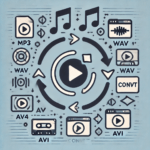
File Format Converters for Transcriptionists
File format converters are essential tools for transcriptionists, making it easy to convert audio and video files into the right formats. They ensure your transcription software works smoothly, preserve the quality … Continue Reading about File Format Converters for Transcriptionists

File Format in Transcription
The choice of file format can significantly impact the ease and accuracy of transcription work, influencing everything from compatibility with transcription software to the quality of the audio or video being … Continue Reading about File Format in Transcription

The Best Playback Tools for Transcriptionists
For professional transcriptionists, having access to a robust audio/video playback tool is non-negotiable. These playback tools are designed to enhance the clarity of recordings, simplify file management, and … Continue Reading about The Best Playback Tools for Transcriptionists

4 Challenges Encountered by Transcriptionists
Transcriptionists play a pivotal role in academic research and journalism, meticulously transforming spoken words into written text. However, beneath the seemingly straightforward task lies a labyrinth of challenges … Continue Reading about 4 Challenges Encountered by Transcriptionists